

Authentic Luhya-Style Chicken Recipe
There’s something deeply special about the way chicken is prepared in Western Kenya. Known as the authentic Luhya-style chicken recipe, this dish is more than just food—it’s culture, heritage, and a taste of home.
In the Luhya community, chicken isn’t just another meal; it’s a delicacy that graces the table during celebrations, family gatherings, and times of honor.
Whether it’s serving guests, marking a festive occasion, or simply enjoying a hearty dinner with chapati or ugali, Luhya-style chicken has a way of bringing people together.
What makes this recipe stand out from regular chicken stews is the unique preparation method. Unlike typical chicken curries or oven-roasted chicken, the Luhya way begins with lightly roasting the whole chicken over a charcoal jiko (traditional stove).
This first step adds a smoky depth of flavor, seals in juices, and gives the chicken its signature golden-brown look before it even touches the pan.
It’s not about cooking it fully over the fire—it’s about enhancing the taste and making the chicken easier to cut into large, hearty chunks that the Luhya community is known for enjoying.
Once the chicken is roasted and cut, the cooking continues with fresh, simple ingredients—onions, garlic, tomatoes, green peppers (hoho), and classic Kenyan spices like paprika, curry powder, and cayenne.
To ensure tenderness, especially for free-range chicken (which can often be tougher), a natural food softener known locally as munyu is added. This softener, traditionally used in Western Kenya, not only tenderizes the chicken but also enriches the stew with a distinct flavor that makes this dish truly unforgettable.
This Kenyan chicken recipe is not just about taste—it’s about rich culture. In the Luhya culture, chicken pieces are carefully cut along the joints to avoid breaking bones unnecessarily, and large chunks are left intact for a richer eating experience. From the prized drumsticks to the gizzard (imondo), nothing goes to waste. Even the bitter spleen is carefully removed to keep the stew clean and flavorful.
In this blog, I’ll walk you step-by-step through making this authentic Luhya-style chicken stew right from roasting, cutting, seasoning, simmering, and finally serving it hot with chapati, rice, or ugali.
By the end, you’ll not only have a delicious dish on your table but also a deeper appreciation of the cultural heritage behind it.
So if you’ve been searching for a Kenyan chicken recipe with a traditional touch, this is the one. Let’s dive in and make an unforgettable pot of Luhya-style chicken stew.
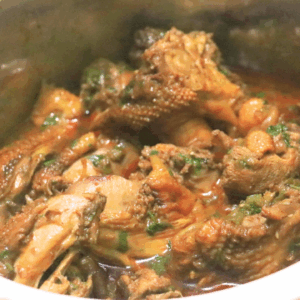
Authentic Luhya-Style Chicken Recipe | Kenyan Traditional Cooking
Equipment
- 1 Jiko (charcoal stove)
- 1 large sufuria (cooking pot)
- 1 knife
- 1 chopping board
- 1 Wooden Spoon
Ingredients
- 1 whole free-range chicken
- ⅓ cup natural food softener (munyu) – optional but recommended for tougher chicken
- Salt to taste
- 1 tsp paprika
- ¾ tsp curry powder
- ¼ tsp cayenne pepper
- 1 finely chopped large onion
- 3 cloves fresh garlic (then finely grated)
- 2 finely chopped large tomatoes
- 1 finely chopped medium green pepper (hoho)
- 3 tbsps finely chopped fresh coriander (cilantro)
- A little cooking oil for frying
Instructions
- Roast the Chicken Lightly Over CharcoalThe very first and most important step in the Luhya chicken recipe is roasting the chicken whole over a jiko (charcoal stove). This isn’t meant to cook it completely, but to give it a smoky flavor and brown the skin. Rotate the chicken every few minutes, making sure it browns evenly without burning. This process takes about 10 minutes.
- Cut the Chicken the Luhya WayAfter roasting, cut the chicken into large chunks. Traditionally, the Luhya community prefers not to break bones, so work along the joints. Remove the crop from the neck, carefully separate the drumsticks, thighs, wings, and meaty parts without splintering the bones. Don’t forget the prized gizzard (imondo)—a delicacy in Luhya households. Prepare it by cutting it slightly open, peeling off the inner lining that contains the remains, get rid of these, and rinse the gizzard.Also, remove the bitter spleen so it doesn’t spoil the taste of your stew.(Optionally, you can also lightly roast the chicken chunks over a metal rack on the charcoal stove to ensure they brown evenly on all sides.)Thoroughly clean the chicken chunks then set aside.
- Start the Frying BaseIn a large sufuria (cooking pot), heat some oil and fry onions until light golden brown.Add garlic and stir until golden brown, then add the tomatoes. Cook until softened.Sprinkle in the spices—paprika, curry powder, cayenne, and salt. Stir well. (Keep in mind you can use spices of choice)
- Add the Chicken and Natural SoftenerAdd the roasted chicken pieces into the pot and mix with the fried spice base.Pour in the munyu (natural softener). This is especially important if you’re cooking free-range chicken, which takes longer to soften. Cover the pot and keep turning the chicken every few minutes as it cooks.
- Add Green Pepper and WaterOnce the chicken begins to dry out, add in chopped green pepper. Stir for a minute.Pour in water depending on how much soup you want. For chapati or rice, a richer soup works well, while a thicker stew pairs better with ugali. Stir, then cover. Simmer for about 30–40 minutes, until the chicken is fully cooked and tender.
- Finish with CorianderFinally, add freshly chopped coriander leaves and stir lightly. Your Luhya chicken stew is ready to serve!
Video
Notes
Serving Suggestions
This dish pairs beautifully with:- Soft layered chapati
- Steamed white rice
- Traditional ugali
- Kenyan-style vegetables on the side
Why You’ll Love This Luhya Chicken Recipe
- Authentic flavor – the roasting step gives a smoky richness you won’t get in regular stews.
- Culture – learn how chicken is prepared the Western Kenyan way.
- Budget-friendly – uses simple, locally available ingredients.
- Versatile – can be served with chapati, rice, or ugali.
Notes
- Free-range chicken vs broiler: Free-range (kienyeji) chicken has more flavor but is tougher, so always use a natural softener (munyu) or simmer longer (or in the pressure cooker to reduce cooking time) for best results. Broiler chicken cooks faster and may not need softening.
- Soup thickness: For chapati or rice, leave a bit more soup for dipping. For ugali, reduce the liquid for a thicker stew.
- Charcoal roasting: The quick jiko roast adds a smoky depth of flavor. If you don’t have a jiko, you can sear the chicken lightly in a dry pan for a similar effect.
- Cutting the chicken: The Luhya style prefers larger chunks cut along the joints instead of tiny pieces—this keeps the stew hearty and satisfying.
- Storage: Leftovers keep well in the fridge for up to 3 days. Reheat slowly on the stovetop with a splash of water to retain flavor and softness.
Let’s Continue the Journey Together!
I hope you enjoyed learning how to make this authentic Luhya style chicken recipe. It’s a dish that carries tradition, flavor, and a touch of home with every bite.
If you’d love more simple, doable Kenyan recipes and hospitality tips, be sure to subscribe to my newsletter so you never miss an update. And don’t forget to join me on YouTube at Recipes and Hospitality with Clara, where I share step-by-step videos to help you bring these meals to life in your own kitchen. Let’s continue cooking, sharing, and creating memories together!
Recommended:
Kenyan No-meat Pilau Recipe| Best Pilau Recipe
Pilau Masala Spice Recipe Without a Grinder
Cold Water Chapati Recipe| Kenyan Roti
Best Rabbit Meat Wet Fry Recipe
4 Ingredient Kenyan Mandazi Recipe
No-cheese No-oven Budget-friendly Pizza Recipe on Gas Stove Top
Easiest No-oven Granola Recipe
Basic No-oven Cake Recipe on Gas