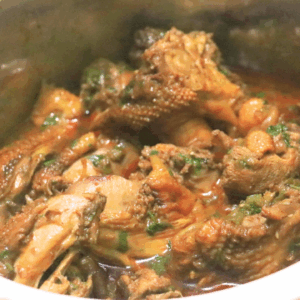
Authentic Luhya-Style Chicken Recipe | Kenyan Traditional Cooking
Bring the rich taste of Western Kenya to your table with this authentic Luhya-style chicken recipe. Lightly roasted over charcoal for a smoky flavor, then simmered in spices, onions, tomatoes, and a natural softener (munyu), this hearty chicken stew is tender, flavorful, and perfect with chapati, rice, or ugali. Plus, don't miss the video tutorial at the end of this post for extra guidance.
Equipment
- 1 Jiko (charcoal stove)
- 1 large sufuria (cooking pot)
- 1 knife
- 1 chopping board
- 1 Wooden Spoon
Ingredients
- 1 whole free-range chicken
- ⅓ cup natural food softener (munyu) – optional but recommended for tougher chicken
- Salt to taste
- 1 tsp paprika
- ¾ tsp curry powder
- ¼ tsp cayenne pepper
- 1 finely chopped large onion
- 3 cloves fresh garlic (then finely grated)
- 2 finely chopped large tomatoes
- 1 finely chopped medium green pepper (hoho)
- 3 tbsps finely chopped fresh coriander (cilantro)
- A little cooking oil for frying
Instructions
- Roast the Chicken Lightly Over CharcoalThe very first and most important step in the Luhya chicken recipe is roasting the chicken whole over a jiko (charcoal stove). This isn’t meant to cook it completely, but to give it a smoky flavor and brown the skin. Rotate the chicken every few minutes, making sure it browns evenly without burning. This process takes about 10 minutes.
- Cut the Chicken the Luhya WayAfter roasting, cut the chicken into large chunks. Traditionally, the Luhya community prefers not to break bones, so work along the joints. Remove the crop from the neck, carefully separate the drumsticks, thighs, wings, and meaty parts without splintering the bones. Don’t forget the prized gizzard (imondo)—a delicacy in Luhya households. Prepare it by cutting it slightly open, peeling off the inner lining that contains the remains, get rid of these, and rinse the gizzard.Also, remove the bitter spleen so it doesn’t spoil the taste of your stew.(Optionally, you can also lightly roast the chicken chunks over a metal rack on the charcoal stove to ensure they brown evenly on all sides.)Thoroughly clean the chicken chunks then set aside.
- Start the Frying BaseIn a large sufuria (cooking pot), heat some oil and fry onions until light golden brown.Add garlic and stir until golden brown, then add the tomatoes. Cook until softened.Sprinkle in the spices—paprika, curry powder, cayenne, and salt. Stir well. (Keep in mind you can use spices of choice)
- Add the Chicken and Natural SoftenerAdd the roasted chicken pieces into the pot and mix with the fried spice base.Pour in the munyu (natural softener). This is especially important if you’re cooking free-range chicken, which takes longer to soften. Cover the pot and keep turning the chicken every few minutes as it cooks.
- Add Green Pepper and WaterOnce the chicken begins to dry out, add in chopped green pepper. Stir for a minute.Pour in water depending on how much soup you want. For chapati or rice, a richer soup works well, while a thicker stew pairs better with ugali. Stir, then cover. Simmer for about 30–40 minutes, until the chicken is fully cooked and tender.
- Finish with CorianderFinally, add freshly chopped coriander leaves and stir lightly. Your Luhya chicken stew is ready to serve!
Video
Notes
Serving Suggestions
This dish pairs beautifully with:- Soft layered chapati
- Steamed white rice
- Traditional ugali
- Kenyan-style vegetables on the side
Why You’ll Love This Luhya Chicken Recipe
- Authentic flavor – the roasting step gives a smoky richness you won’t get in regular stews.
- Culture – learn how chicken is prepared the Western Kenyan way.
- Budget-friendly – uses simple, locally available ingredients.
- Versatile – can be served with chapati, rice, or ugali.
Notes
- Free-range chicken vs broiler: Free-range (kienyeji) chicken has more flavor but is tougher, so always use a natural softener (munyu) or simmer longer (or in the pressure cooker to reduce cooking time) for best results. Broiler chicken cooks faster and may not need softening.
- Soup thickness: For chapati or rice, leave a bit more soup for dipping. For ugali, reduce the liquid for a thicker stew.
- Charcoal roasting: The quick jiko roast adds a smoky depth of flavor. If you don’t have a jiko, you can sear the chicken lightly in a dry pan for a similar effect.
- Cutting the chicken: The Luhya style prefers larger chunks cut along the joints instead of tiny pieces—this keeps the stew hearty and satisfying.
- Storage: Leftovers keep well in the fridge for up to 3 days. Reheat slowly on the stovetop with a splash of water to retain flavor and softness.