
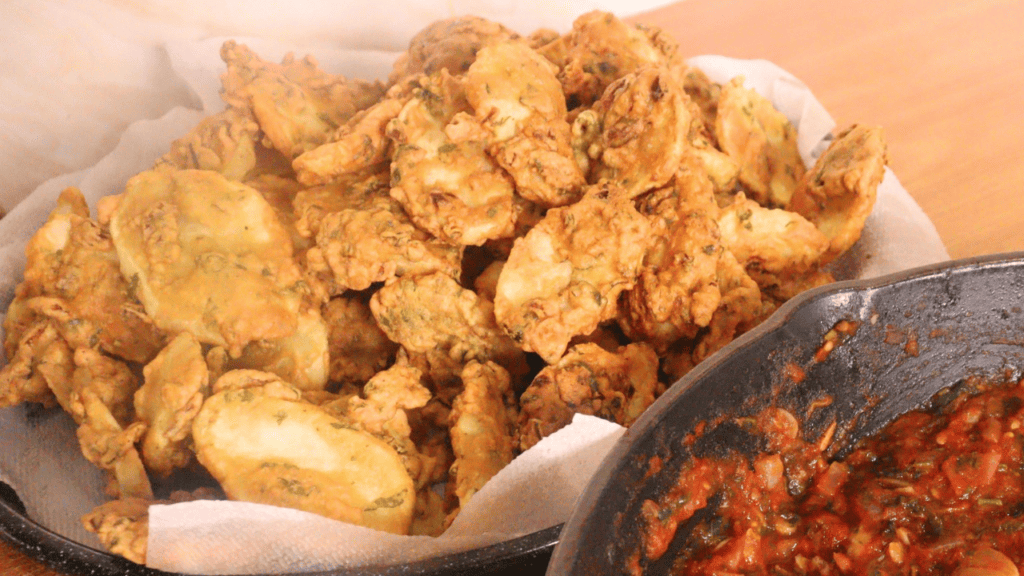
Easy Bhajia with Cassava Flour
Have you ever bought cassava flour and wondered what else you can make with it besides ugali? If you’re looking for creative ways to use cassava flour in your kitchen, these bhajia with cassava flour are worth trying!
Bhajia are a popular snack and accompaniment in many Kenyan homes. Made using potatoes coated in a seasoned mixture before being deep-fried until golden, they can be enjoyed as a snack, served alongside a meal, or paired with a delicious homemade chutney. While there are different ways of preparing bhajia, this recipe uses cassava flour instead of the usual wheat flour.
I decided to try bhajia with cassava flour as another way of using this familiar local ingredient. Cassava flour has a different texture from wheat flour, so it’s helpful to understand how it behaves when preparing recipes that traditionally use wheat flour.
In this recipe, I combine it with a little cornflour or cornstarch to help form the coating, together with eggs, onions, fresh dhania (cilantro), and a few simple seasonings.
What I particularly enjoy about homemade bhajia is that you can adjust the seasonings to suit your family’s preferences. Garlic and ginger add flavour, turmeric gives the coating a lovely colour, and fresh dhania brings freshness to every bite. You can also add other spices you enjoy, depending on how you like your bhajia seasoned.
Another advantage of making bhajia at home is that you can prepare them using ingredients you already have in your kitchen. You don’t need an elaborate list of ingredients to make something delicious for your family or guests. Serve them freshly fried with homemade tomato chutney, your favourite dipping sauce, or alongside a meal.
If you are looking for a gluten-free alternative to traditional potato bhajia, this recipe may be a useful option. However, remember that the other ingredients, including the cornflour, must also be gluten-free if you are preparing the recipe for someone who needs to avoid gluten. Take care to prevent cross-contamination during preparation as well.
Let’s get into the recipe and learn how to make these homemade bhajia with cassava flour!
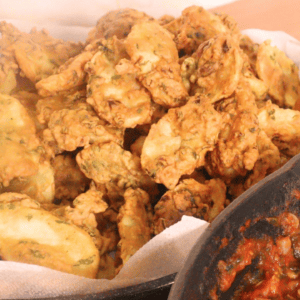
Bhajia with Cassava Flour (Gluten-Free Potato Bhajia)
Equipment
- Chopping board and knife
- large mixing bowl
- Measuring cups and spoons
- cooking spoon
- Deep frying pan or sufuria
- Slotted frying spoon or perforated skimmer
- Plate or tray lined with paper towels
Ingredients
- 15 medium potatoes peeled
- 1 large onion chopped
- 1-2 tablespoons chopped fresh cilantro dhania
- 2 cups cassava flour
- 4 tablespoons cornflour cornstarch
- 1 teaspoon salt or to taste
- ½ teaspoon turmeric powder
- 1 teaspoon garlic-ginger paste (Alternatively, ½ teaspoon finely grated garlic and ½ teaspoon finely grated ginger)
- 2 eggs
- Water as needed to form a thick paste
- Vegetable oil for deep-frying
- Optional: additional spices of your choice
Instructions
- Prepare the potatoesPeel and wash the potatoes, then slice them thinly and evenly. Keeping the slices a similar thickness helps them cook more evenly when fried.
- Prepare the cassava flour mixtureIn a large bowl, combine the cassava flour, cornflour, salt, turmeric, garlic-ginger paste, chopped onion and fresh dhania. Add the eggs and mix well.
- Make the batterAdd water gradually as you mix until you have a thick paste that can coat the potato slices. Avoid adding too much water at once, as cassava flour absorbs liquid differently from wheat flour. Add any additional spices you prefer.
- Coat the potatoesAdd the sliced potatoes to the batter a few at a time and mix until the slices are evenly coated. Separate any slices that stick together so that the coating reaches each piece.Tip: Avoid adding all the potatoes to the batter at once, as they can release moisture and make the paste thinner. Instead, add only enough potato slices for the batch you are about to fry. Once you've fried that batch and are ready to fry the next one, add more potato slices to the remaining batter and mix to coat.
- Heat the oilHeat vegetable oil in a deep frying pan or sufuria over medium heat. If you have a kitchen thermometer, aim for approximately 170–180°C (340–355°F). The oil should be hot enough to cook the coating without browning it too quickly.If you don't have a thermometer, test the oil by carefully frying one potato slice first. It should sizzle as soon as it enters the oil. If it browns too quickly before the potato cooks through, the oil is too hot. If it barely sizzles, the oil needs more time to heat up. Once the temperature is right, you can begin frying the bhajia in small batches.
- Fry the bhajiaCarefully add the coated potato slices in small batches. Fry, turning as needed, until golden and crisp and the potatoes are cooked through. This usually takes several minutes per batch, depending on the thickness of the slices. Avoid overcrowding the pan.
- Drain and serveRemove the cooked bhajia using a slotted frying spoon and place them on a paper towel-lined plate or a draining rack. Continue with the remaining batches and serve while warm.
Video
Notes
Tips for making bhajia with cassava flour
-
Slice the potatoes evenly: Thin, even slices help the potatoes cook through before the coating becomes too dark.
-
Add water gradually: Start with a little and add more only as needed to form a thick coating.
-
Fry in batches: Too many potato slices in the pan can lower the oil temperature, resulting in greasy bhajia.
-
Adjust the seasoning: You can experiment with spices such as paprika, cumin or black pepper to suit your taste.
-
Serve freshly fried: Bhajia are generally at their best when served hot and crisp.
What to serve with bhajia
These bhajia go particularly well with a simple homemade tomato chutney. You can also serve them with your preferred dipping sauce or as part of a meal with other accompaniments. If you enjoy making sauces at home, try pairing them with a fresh tomato chutney made with tomatoes, onions and your favourite seasonings.Frequently asked questions
1. Can I use cassava flour instead of wheat flour for bhajia? Yes, you can make bhajia using cassava flour, as in this recipe. The texture and handling of the batter will differ from wheat-based batter, so add the water gradually and ensure the potatoes are thoroughly cooked. 2. Is cassava flour gluten-free? Pure cassava flour is naturally gluten-free. If you need to avoid gluten strictly, check the labels on all ingredients and prevent cross-contamination during preparation and frying. 3. Why is my bhajia batter too thin? You may have added too much water. Add a little more cassava flour and mix until the batter thickens enough to coat the potato slices. 4. How do I know when the bhajia are cooked? They should be golden on the outside, and the potato slices should be tender inside. If they brown too quickly, lower the heat so the potatoes have time to cook through. 5. Can I prepare the bhajia ahead of time? You can prepare the dry ingredients and chop the other ingredients ahead of time. For the best texture, coat and fry the potatoes closer to serving time.Final thoughts on Bhajia with Cassava Flour
Making bhajia with cassava flour is one way to experiment with a familiar ingredient and bring a little variety into your home cooking. With potatoes, fresh dhania, onion and a few simple seasonings, you can prepare a batch to share with your family or guests.
Serve them warm with homemade tomato chutney and enjoy!
Watch More on YouTube
If you try this recipe, I’d love to hear how it turns out in your kitchen. You’re also welcome to visit our YouTube channel, Recipes and Hospitality with Clara, here, where we share budget-friendly recipes and practical ways to make hospitality enjoyable at home.
You Might Also Like:
Recommended:
No-oven Gluten-free Stovetop Oatmeal Cookies
No-oven Stovetop Gluten-free Corn Flour Cookies
No-oven Gluten-free Gram Flour Cookies
Easiest No-oven Granola Recipe
Basic No-oven Cake Recipe on Gas